.png)
Turning excavated soil and sediments into resources: the project enters its operational phase in Hauts-de-France

A few months ago, Neo-Eco launched an ambitious programme to turn excavated soil and sediments into a true circular economy lever — rather than a storage constraint for local authorities.
A clear, structuring objective
The project aims to transform these materials into eco-products in order to:
limit the extraction of natural resources,
reduce waste landfilling,
and structure sustainable, replicable circular value chains at regional scale.
Where does the project stand today?
The programme has reached a key milestone, with the full entry into its formulation phase.
🟢 Phase 1 – Material studies: Identification of deposits and the most relevant valorisation pathways.
🟢 Phase 2 – Eco-material formulation: Development and environmental monitoring to ensure technical performance and environmental safety.
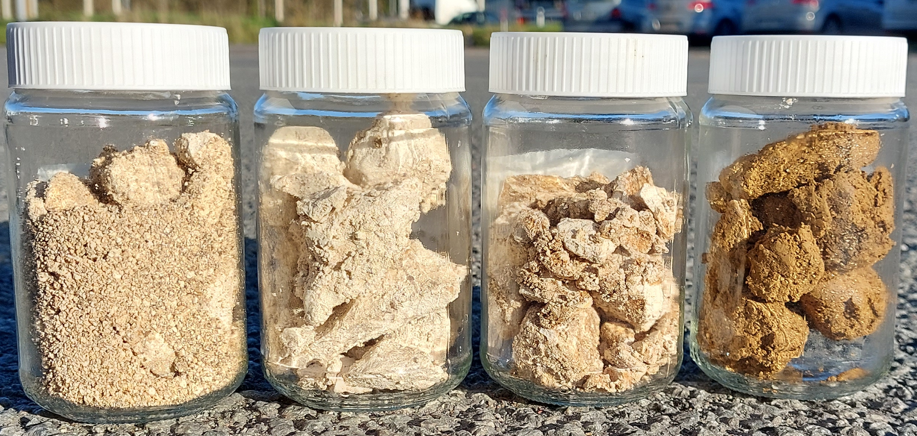
👉 At this stage:
11 applications integrating soil or sediments from the Canal Seine-Nord Europe have already been studied;
30 additional applications are currently under assessment, covering:
road sub-base layers,
construction and public works applications,
landscaping,
agronomic uses.
This work makes it possible to move from intention to concrete, technically and environmentally validated solutions, designed to be directly deployable in territorial development projects.
An approach true to Neo-Eco’s DNA
This project fully reflects Neo-Eco’s core approach:
securing operational outlets for excavated materials,
reducing reliance on virgin resources,
and structuring local, long-term and replicable value chains.

A collective project, supported by territorial stakeholders
Neo-Eco would like to thank all partners involved in this initiative:the Région Hauts-de-France, CD2E, IMT Nord Europe, the Canal Seine-Nord Europe, as well as the support of European FEDER funding.
What’s next?
The next steps will focus on continuing the studies and consolidating the results obtained in order to firmly embed these solutions into regional infrastructure and development practices.


